Uncovering the Stories Beneath Our Feet with Morpho’s 2026 Working Group

We are excited to announce the Morpho Initiative’s new working group: Tracemakers: Scalable Indicators of Soil Ecosystem Engineering. This project has been selected for its innovative, interdisciplinary approach to promote science for solutions.
Since its launch in 2022, the Morpho Initiative has brought researchers, practitioners, and decision-makers together across sectors and borders to turn existing data into science that is ready for environmental management use. The Tracemakers working group carries this model into a part of the environment most of us walk over every day without a second thought: the soil beneath our feet, and the animals that engineer it.

Reading the Signatures Soil Animals Leave Behind
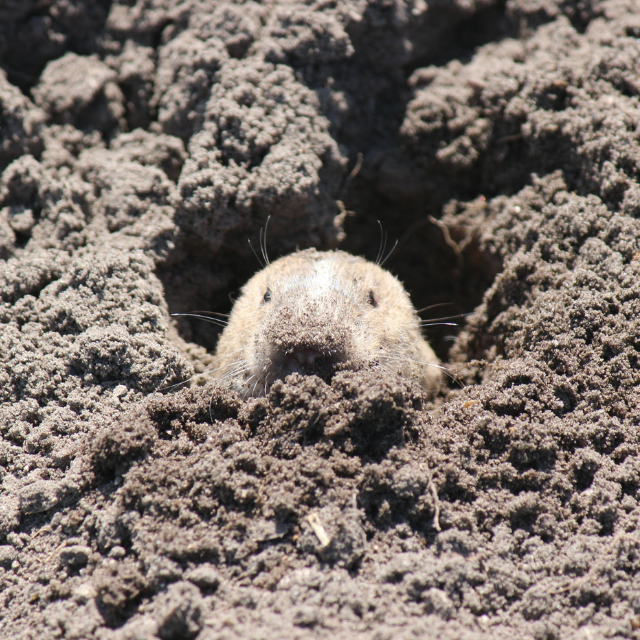
Belowground dwellers such as earthworms, ants, moles, and gophers do more than live in soil, they help build it. As Nate Looker (Stanford University), a research scientist on the project puts it, these animals are “soil ecosystem engineers: their activities sculpt habitat for other organisms, help channel rainfall towards plants and groundwater, and influence the cycling of carbon and nutrients.” Even though they play an essential role in keeping soils healthy, Looker adds “soil animals have historically been overlooked in both soil mapping and monitoring efforts.”
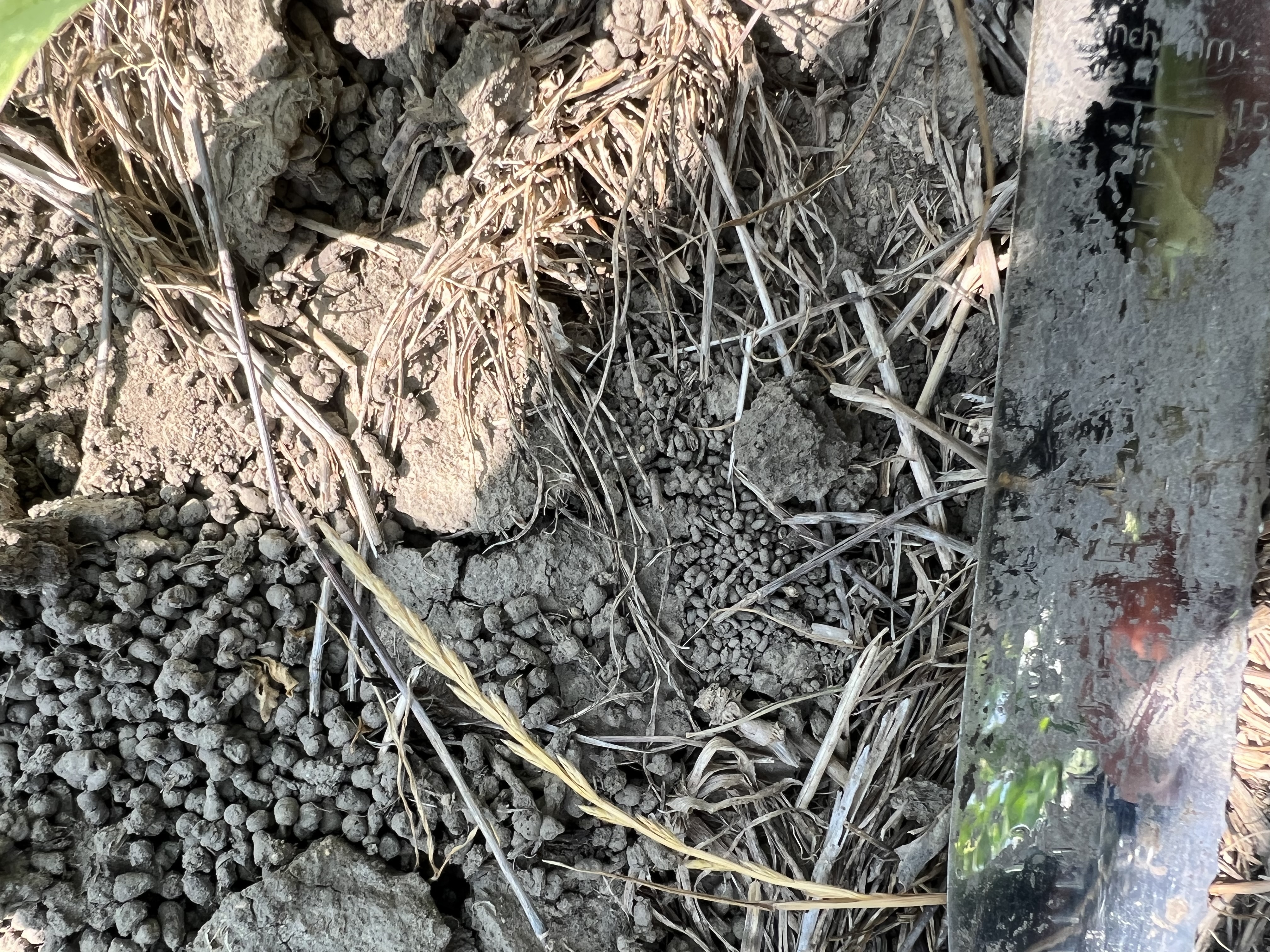
This is exactly what Tracemakers is aiming to change. Led by Jane Willenbring (Stanford University), George Brown (Embrapa Forestry, Brazil), Miguel Cooper (University of São Paulo-ESALQ, Brazil), and Jérôme Mathieu (Sorbonne Université, France), the working group will spend the next two years mining faunal "traces" from burrows to biogenic aggregates (see below) out of legacy soil survey records from the United States, Brazil, Mexico, and Central America, and turning them into a practical, scalable way to track soil biological health.
“Our first goal,” Looker emphasizes, “is to establish baselines for soil ecosystem engineering, asking, what legacies have different types of soil fauna imparted across landscapes with different climates, soil types, and biogeographical histories? Our second goal is to develop practical resources for detecting the response of ecosystem engineers to land management, including ecosystem restoration and regenerative agriculture.”
The timing matters. The European Union's new Soil Monitoring Directive requires biological indicators of soil health but offers no standardized way to measure faunal activity, and a landmark 2025 Nature study, co-authored by Tracemakers co-lead Mathieu, established that the engineering effects of invertebrates on soil functioning are large and consistent across the globe. What's been missing is a system to detect, harmonize, and interpret the traces those animals leave behind, traces that soil surveys have actually been recording in text and photographs for more than a century, but never systematically. Looker explains:
"Tracemakers targets the gap between recent data compilation efforts focused on soil biodiversity (e.g., species richness, abundance, biomass) and soil properties (e.g., carbon, texture) to better understand the complex relationships between soil fauna and the ecosystems they inhabit and transform," Looker adds. "Fauna-soil interactions provide a vantage for predicting how soils will respond to changes in land use, climate, and species assemblages."
A Team Built to Bridge Science and Practice
Tracemakers brings together an intentionally broad coalition: soil ecologists, pedologists, geomorphologists, and researchers alongside the practitioners who will actually use the results. Organizations from a wide range of disciplines will co-design the framework from the very first meeting, ensuring the tools that come out of the project are shaped by the people running restoration projects and farms, not just those analyzing the data.
"Like soils themselves, soil datasets can be complex and highly varied," Looker reflects. "Harmonizing these diverse soil datasets presents exciting opportunities to explore fundamental ecological concepts (e.g., niche construction) and implications for ecosystem services at unprecedented spatial scales. Our international team is excited to work with NCEAS to make soil data more FAIR (findable, accessible, interoperable, and reusable) so that soils are more easily factored into ecosystem management and monitoring."
The Morpho Initiative's mission is to bring diverse teams together to tackle complex environmental questions through synthesis, innovation, and data that's ready to be used. Tracemakers exemplifies that spirit by uniting soil scientists, farmer organizations, and monitoring bodies across the Americas and Europe to make sure the engineers working quietly underground finally get counted.
Stay tuned as the Tracemakers working group launches its collaboration in late 2026.