The Impact of NCEAS

NCEAS has hosted over 4,000 individuals and supported more than 400 projects since its inception in 1995. The projects have produced a wide array of outcomes, from specific results to general knowledge about a discipline and its application to the management of resources. The Center has engaged hundreds of graduate students and grade school children, and has developed information access tools that are becoming the standard for the discipline. Unlike many research centers, there is no permanent body of scientific faculty within NCEAS, rather, the Center maintains its well-known vitality through the dynamic nature of its resident and visiting scientists, who are collectively responsible for the success of NCEAS.

The impact of NCEAS over its lifespan has been broad and significant.

See funding agency reports for further information.

High Productivity and Significance

NCEAS Ranked One of Top Ecological Institutes

  • In 2005, NCEAS Director Jim Reichman, was interviewed by the editors of ISI Essential Science Indicators, as NCEAS had reached the top 1% of institutions world wide working in ecology and the environment (38,000 institutions in total) in terms of total citations in the field of of Environment/Ecology.
  • NCEAS was ranked #22 out of these 38,000 international institutions in publications impact in ecology and the environment.  These numbers are very conservative, because they are based on institutional affiliations, rather than acknowledgements. Only 40% of NCEAS products have NCEAS listed as the institutional affiliation for one or more of the authors.

Large volume of publications

  • More than 1,100 publications, many in Science, Nature, PNAS, and TREE
  • NCEAS is ranked 22nd (among more than 38,000 institutions) in citations/article.
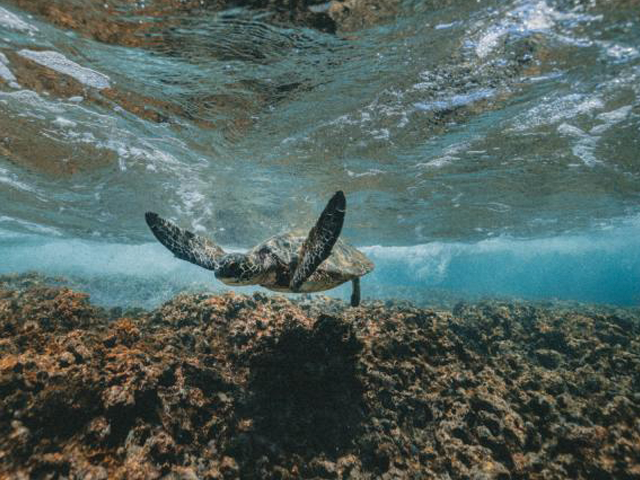
  • The press release for an NCEAS project on marine biodiversity (Worm et al., 2006, Science 314:787-790) was the most downloaded press release from the NSF website for 2006, and possibly the most downloaded press release of all time for NSF.
Number Publications by Year 

Expanding Breadth and Influence of Research

  • NCEAS articles have been published in 200+ different journals.
  • NCEAS has attracted projects pertaining to ecology from outside the natural sciences, most notably economics, philosophy, and sociology.
  • Areas of inquiry stretch from genes to biosphere. Topics include, but are not limited to, climate change, infectious disease, economics, marine ecology and conservation. (Explore the NCEAS web site to read more about current and featured research.)
  • NCEAS projects have received recognition in local, regional, and national press including Science, Nature, The New York Times, the Los Angeles Times, National Public Radio, PBS television, and other national television programs.

 Broad Participation by the Scientific Community

  • Roughly 73% of working group participants in new working group projects this past year were first-time participants.
Graph-Percent First Time Working Group Visitors

Most visitors visit only one or two times. With more than 1,000 visits to NCEAS each year, the network of ecologists who are using NCEAS continues to grow. 

  • NCEAS participants come from diverse regions, institutions, and fields of study:
    • Participants are from 49 US states, Washington DC, Puerto Rico and 57 countries
    • 19% of participants are from outside the U.S.
    • More than 550 academic institutions have been represented; roughly a quarter of these are non-PhD granting institutions
    • More than 500 non-academic entities (companies, NGOs, agencies) have been represented
    • Participants belong to more than 480 scholarly societies
  • Both junior and senior scientists participate in NCEAS activities:
    • 17% of participants are assistant professors
    • 28% are associate professors
    • 55% are full professors
  • Women are well-represented at NCEAS:
    • 35% of the Science Advisory Board members
    • Approximately 40% of Postdoctoral Associates
    • Over 50% of Graduate interns
Percent Women in NCEAS Activities

Highly Successful Postdoctoral Associates

  • Postdocs are chosen from a highly diverse, competitive applicant pool and represent some of the best young scientists in the world.
  • Postdocs are mentored in a new culture of collaboration, synthesis, and interdisciplinary research, allowing their scholarship to flourish. This unique postdoctoral experience was highlighted in an article in Nature.
  • During one 18-month period Postdoctoral Associates received the top awards for young scientists from the Ecological Society of America, the American Society of Naturalists, and the American Society of Limnology and Oceanography.
  • Several have received Young Investigator Awards, and one the ASN President's Award. Other awards include the Buell award (best paper by a graduate student) the Tom Frost award (best paper in limnology by a young scientist), and the W. S. Cooper Award (outstanding contributor to the field of geobotany from ESA).

Commitment to Support Conservation and Resource Management

  • Over 25% of the projects at NCEAS include among their goals "informing environmental policy and management".
  • NCEAS participants have come from roughly 240 public agencies (local, national and international) and approximately 260 non-governmental organizations, most of which focus on conservation and resource management
  • Postdoctoral Associates have included three Smith Fellows from The Nature Conservancy. The Center has supported sabbatical fellows from the U.S. Forest Service and NGOs, and currently hosts a conservation outreach associate from SeaWeb.
  • Recognizing the success of the NCEAS approach when applied to specific societal needs, NCEAS has established the Conservation and Resource Management Program for oversight of special projects supported from outside the core NSF funding.
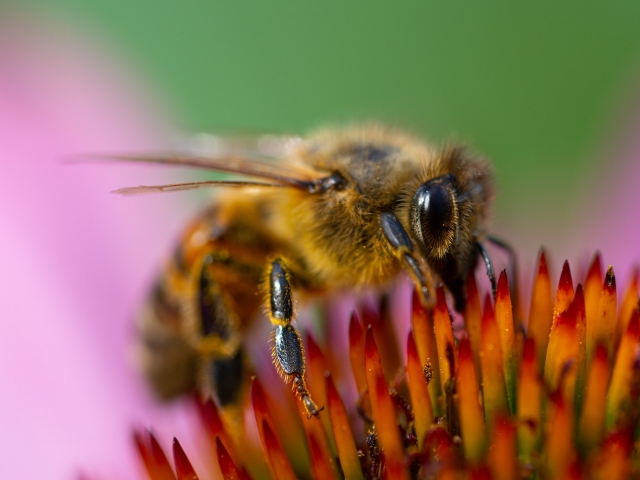
  • NCEAS projects have influenced public policy and resource management in many ways, from testimony before Congress to the development of analytical tools.  For example,  NCEAS scientists contributed to California’s planning process for establishing the Channel Islands Marine Protected Areas and a Working Group’s timely publication on pollinators’ ecosystem services was used by the Congressional Research Service (Johnson, CRS Report for Congress: Recent Honeybee Declines, 31 May 2007) to inform lawmakers about Colony Collapse Disorder in 2007.

Advancing Ecoinformatics Research

  • The NCEAS Ecoinformatics group is a leader in developing collaborations and technical solutions to provide generic tools for more efficient and powerful access and analysis of ecological data.
  • NCEAS and many collaborators have obtained significant funding from the National Science Foundation and private foundations for more than a dozen ecoinformatics research projects .

Improving Access to Data

  • NCEAS maintains a data policy which encourages and facilitates the sharing of data, while respecting the intellectual property rights of data owners.
  • A number of projects have developed major synthetic data sets that will have significance to the broader ecological community.
  • NCEAS provides access to a data repository containing information about research data sets collected and collated as part of NCEAS' funded activities. Information in the NCEAS Data Repository is concurrently available through the Knowledge Network for Biocomplexity (KNB), an international data repository.

Promoting a Culture of Collaboration

  • The average number of authors of an NCEAS article is significantly higher, and the percent of NCEAS articles with a single author is significantly lower than the average for articles in Ecology.
  • Sociologists discovered that the NCEAS model promotes a higher level of productive collaboration than other, more typical models such as in situ resident centers: an interaction density of 50%, 2.5 times higher than the average for other groups that have been analyzed.
  • Unplanned interactions between and among resident and visiting scientists have resulted in significant and new research collaborations.

Community Outreach

  • NCEAS scientists have worked with over 2300 local 5th graders in NCEAS’ Kids do Ecology Program. Scientists work in the classrooms providing inquiry-based instruction in the scientific method as applied to ecological questions.
  • Kids Do Ecology, the companion website, is an award winning bilingual site used internationally by students and teachers for information on biomes, marine mammals, and presentation of data.  From June 2007 to January 2008 the site had 39,000 unique visitors.

Reports & Proposals:

Reports for NSF 

Report for NSF 1995-2001

Report for NSF Site Visit - May, 1998

Annual Report 2002-2003

Annual Report 2003-2004

Annual Report 2004-2005

Annual Report 2005-2006

Annual Report 2006-2007

Report for NSF 2001-2007  

Proposals to NSF

Original NCEAS Proposal for NSF 1994 

Renewal Proposal for NSF 2005