How I Use AI: Li Kui
As part of the AI for the Planet spotlight series, we are introducing "How I Use AI" — a subseries where we hear from the people of NCEAS and their stories about AI and their work.
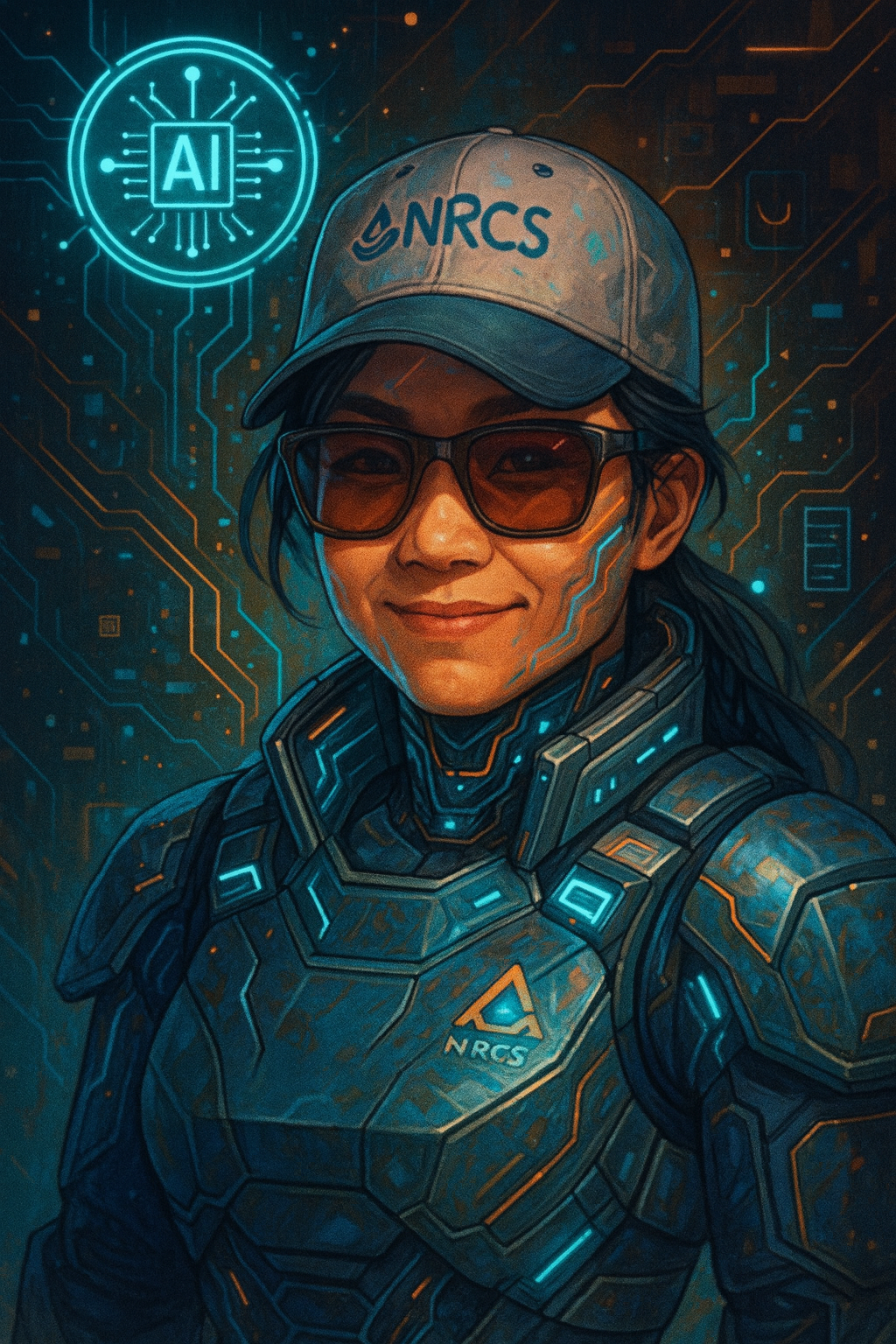
Li Kui is a project scientist at NCEAS where she collects, manages, analyzes, visualizes, and shares scientific data. Part of her work involves annual report writing, which is how she found herself trying out AI for the first time and what she found took her by surprise.
"When ChatGPT was first released, I was working on an annual scientific report. As a non-native English speaker, I typically relied on tools like Grammarly to help polish my writing after completing a draft. This time, however, I decided to try ChatGPT 3.5. Within about thirty minutes of interacting with the tool, it not only corrected grammatical errors but also improved the structure, clarity, and flow of my writing. What impressed me most was that it felt less like using a proofreading tool and more like collaborating with a thoughtful editor."
That single experience set off a chain of questions that has since defined much of her work: What else could generative AI do for scientists? Where does it genuinely help, and where does it fall short? And how do we make sure researchers have the knowledge and access they need to use it responsibly? With this new tool by her side, Kui started to see possibilities everywhere.
"I began exploring applications ranging from coding and data analysis to documentation, communication, literature synthesis, and knowledge discovery. What started as personal experimentation quickly expanded into developing AI training programs, creating resources for researchers, and exploring how AI can be integrated throughout the scientific research lifecycle."
Building a Bridge Between AI and Environmental Science
Today, Kui spends much of her time developing training programs, creating resources, and helping environmental researchers understand both the promise and the limitations of AI tools. The goal, as she sees it, is not to hand scientists a new gadget but to help them develop genuine fluency.
"I spend much of my time helping researchers understand both the opportunities and limitations of AI while identifying practical ways these tools can support environmental science."
Currently, one of her most ambitious projects is co-leading an AI Working Group with faculty and data scientists from five universities. Together, the group is building self-paced learning modules that walk scientists through the full arc of a research project (from forming a question, to collecting and analyzing data, to producing reproducible outputs) with generative AI woven throughout. The emphasis is not simply on tool literacy.
"Our goal is not simply to teach people how to use AI tools, but to help them understand where AI adds value, where human expertise remains essential, and how to use these technologies responsibly."
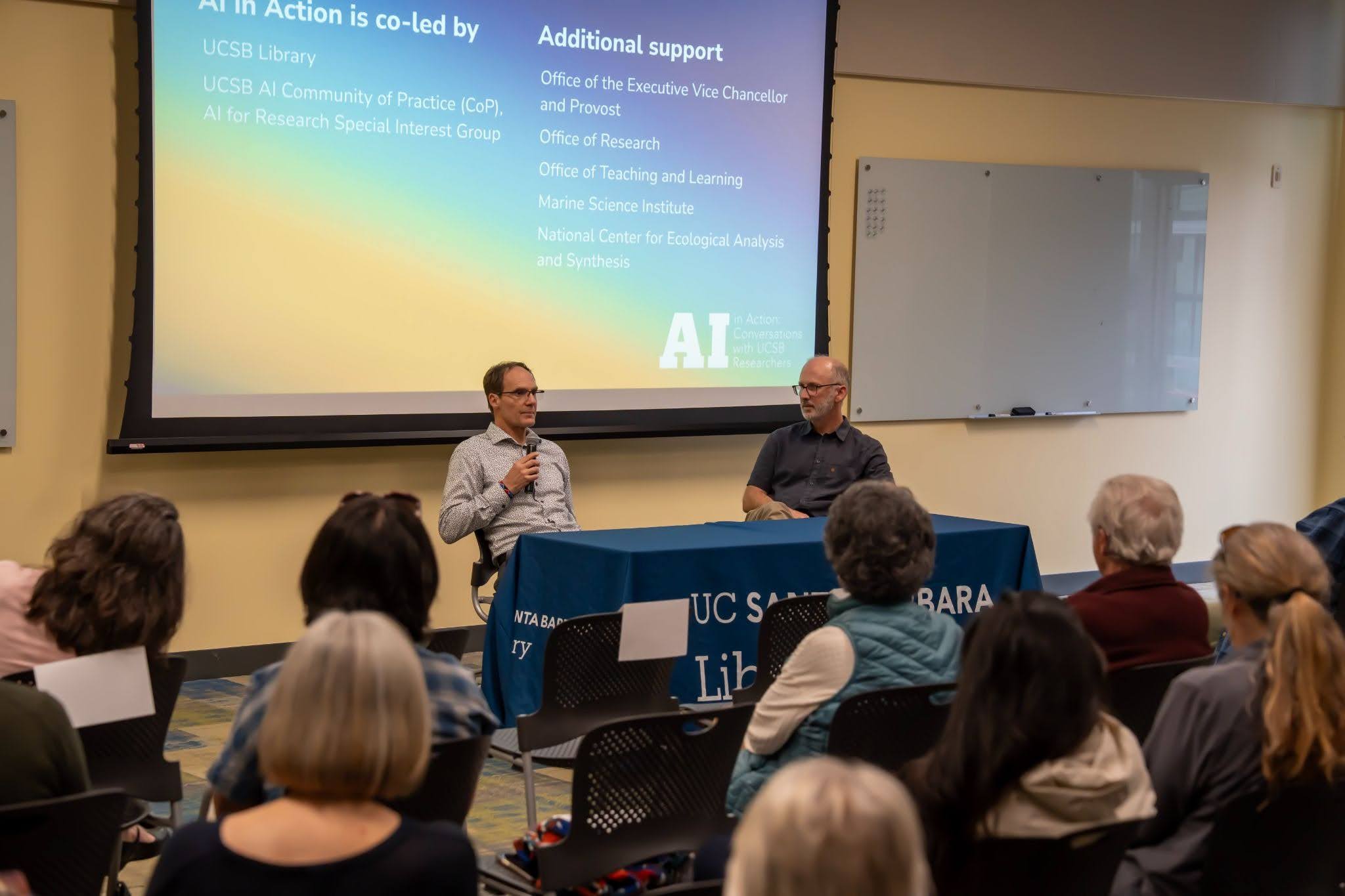
Alongside this, Kui co-organized the AI in Action seminar series with the UCSB Library, a forum that showcases how researchers across campus are already integrating AI into their work. The series serves a dual purpose: demonstrating what is already possible and inspiring researchers who are just beginning to explore the terrain.
Connecting People, Knowledge, and Resources
Perhaps the most expansive initiative Kui has been part of is a proposed statewide AI readiness network spanning higher education libraries, public libraries, and K–12 school libraries across California. The proposal-writing process itself turned out to be unexpectedly illuminating.
Meeting with partners from business, government, workforce development, and nonprofit organizations, she found that strong AI resources and initiatives already existed in many corners — they were simply scattered, siloed, and hard to find.
That observation has made her more optimistic, not less. If AI can help connect people to knowledge and lower technical barriers, its impact reaches well beyond any single research project and could make scientific knowledge more broadly accessible to researchers, organizations, and the public.
A New Way of Working
AI has touched nearly every aspect of Kui's work: website development, coding, writing, project planning, teaching, and learning. But the more interesting shift, she says, is not in productivity, but in possibility.
"By speeding up many routine tasks, it gives me more time and mental space to think creatively, explore new ideas, and venture beyond my comfort zone. Rather than simply making me more productive, AI has changed how I approach research and opened opportunities that I might not have pursued otherwise."
What We Are Not Talking About Enough
Despite her deep engagement with AI, Kui is quick to acknowledge the limits of her own understanding and she thinks that humility is undervalued in these conversations.
"There are so many aspects of AI that are not talked about enough, and I don't think I'm anywhere close to 'understanding' it — even though I've been an early adopter and advocate of AI in research. The field is evolving so quickly that I'm constantly learning something new."
For Kui, that ongoing uncertainty is not a reason for caution so much as a reason to stay curious and to keep building the scaffolding that helps others do the same.
AI as a Tool, Not a Replacement
Looking ahead, Kui envisions AI becoming as routine a part of scientific work as statistical software or programming languages are today. But she is clear that this future requires deliberate effort, not just enthusiasm.
"Like any research tool, we need to understand when, where, what, and how to use AI, in a responsible way. Once we develop that understanding, AI can help researchers reach their full potential by accelerating routine tasks and allowing us to focus more on creativity, critical thinking, and scientific discovery."
In that vision, AI does not replace the scientist. It makes space for the parts of science that only scientists can do.
This article is part of NCEAS's AI for the Planet initiative, which draws on NCEAS's 30 years of experience to support responsible and effective use of AI in environmental science.