Closing the Gap: How NCEAS Is Using AI to Unlock the Full Potential of Biodiversity Monitoring
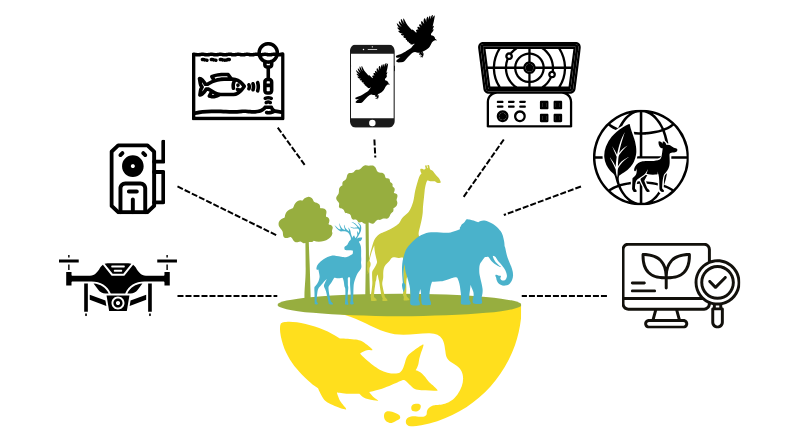
Have you ever uploaded a photo to iNaturalist or used an app like Merlin ID to identify a bird call? When you use these tools, you’re helping create digital assets: data products that can be used to monitor the incredible diversity of life on Earth.
Accurate, timely biodiversity data are essential for protecting species and ecosystems. Yet much of the information needed for effective conservation still arrives too late, at too coarse a scale, or with critical gaps. At the National Center for Ecological Analysis and Synthesis (NCEAS), researchers are using artificial intelligence (AI) not to replace field science, but to help close these gaps, ensuring biodiversity monitoring can keep pace with the accelerating rate of environmental change.
As part of our AI for the Planet initiative at NCEAS, the Digital Assets for Biodiversity project is a collaborative effort advancing automated biodiversity monitoring through improved digital tools, shared frameworks, and AI-powered workflows. The project includes recent NCEAS-led research showing that while automated monitoring technologies hold enormous promise, their implementation still lags far behind what is needed for effective global conservation.

The Promise (and the Reality) of Automated Biodiversity Monitoring
In a 2025 paper led by NCEAS researcher Rachel King, the team conducted the first global assessment of automated biodiversity monitoring systems, cataloging more than 250 existing “digital assets” used to track living organisms worldwide. The findings were striking: most digital assets rely on satellite data, primarily monitor plants at coarse taxonomic resolution, and are heavily concentrated in North America and Europe. Even when data are collected frequently, delays in processing often mean they become available months or years later, limiting their usefulness for real-time decision-making.
“These technologies already exist, but we’re not fully realizing their potential,” says King. “AI can help us move from raw data to usable information faster but only if the workflows, infrastructure, and access are in place.”
The Digital Assets for Biodiversity project at NCEAS is designed to do exactly that: identify bottlenecks, fill critical gaps, and accelerate the responsible use of AI in biodiversity monitoring.
What Are Digital Assets and Why AI Matters
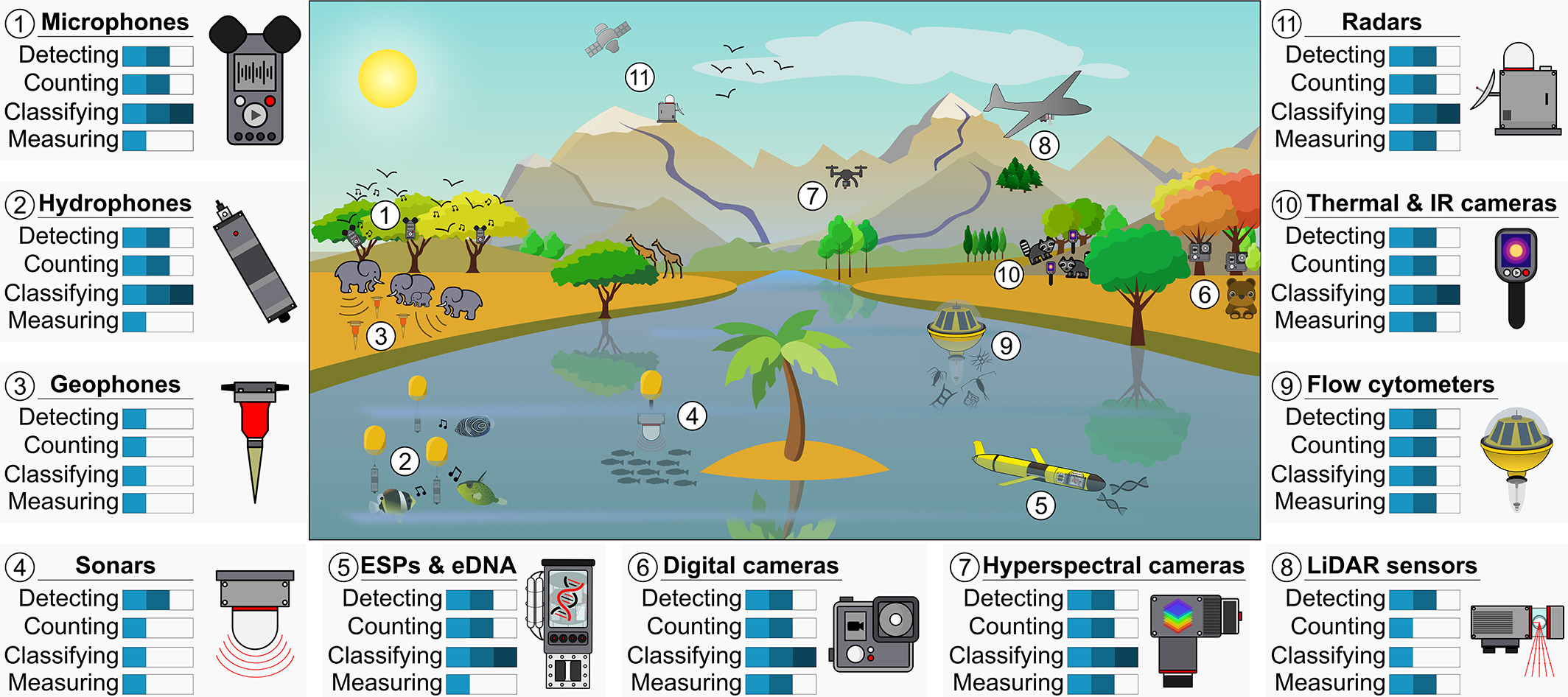
When someone uploads photos or recordings to an app like iNaturalist or Merlin ID, they are contributing to a much larger system of digital assets. In the Digital Assets for Biodiversity project, digital assets include data products generated by automated or semi-automated technologies such as camera traps, acoustic sensors, radars, and hydrophones as well as community science platforms that use similar AI-enabled approaches, see figure below.
Together, these tools can collect biodiversity data at scales impossible for traditional field surveys. But that scale comes with a challenge: they generate enormous volumes of images, audio recordings, and sensor data that would be impractical to process manually.
This is where artificial intelligence becomes essential. Machine learning algorithms can identify species from photos or sound recordings, extract ecological indicators from satellite imagery, and integrate data across platforms. Tools like iNaturalist use AI to suggest species identifications, enabling both scientists and the public to contribute meaningfully to biodiversity monitoring at scale.
“Before AI, someone might have spent months manually labeling images or recordings,” explains King. “Now, AI dramatically reduces that workload and shortens the time between data collection and conservation action.”
At NCEAS, the focus is on using AI as a tool to increase speed, accuracy, and transparency — while ensuring that digital assets remain reproducible, well-documented, and fit for real-world decision-making.
Using AI to Address Real Gaps in Conservation Data
The 2025 NCEAS-led study identified several major challenges limiting the impact of automated biodiversity monitoring:
- Taxonomic gaps, especially for insects, microorganisms, and many marine species
- Geographic biases, with far fewer monitoring assets in biodiversity-rich regions
- Processing bottlenecks, where data exist but are not transformed into usable products
- Delays in data availability, reducing relevance for management decisions
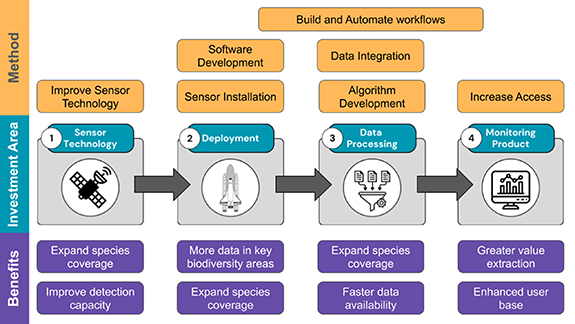
The Digital Assets for Biodiversity project responds directly to these findings. By improving AI-driven data processing workflows, the project helps convert raw sensor data into accessible monitoring products more efficiently, one of the highest-impact leverage points identified in the research.
AI in Practice: Building the Future of Digital Assets
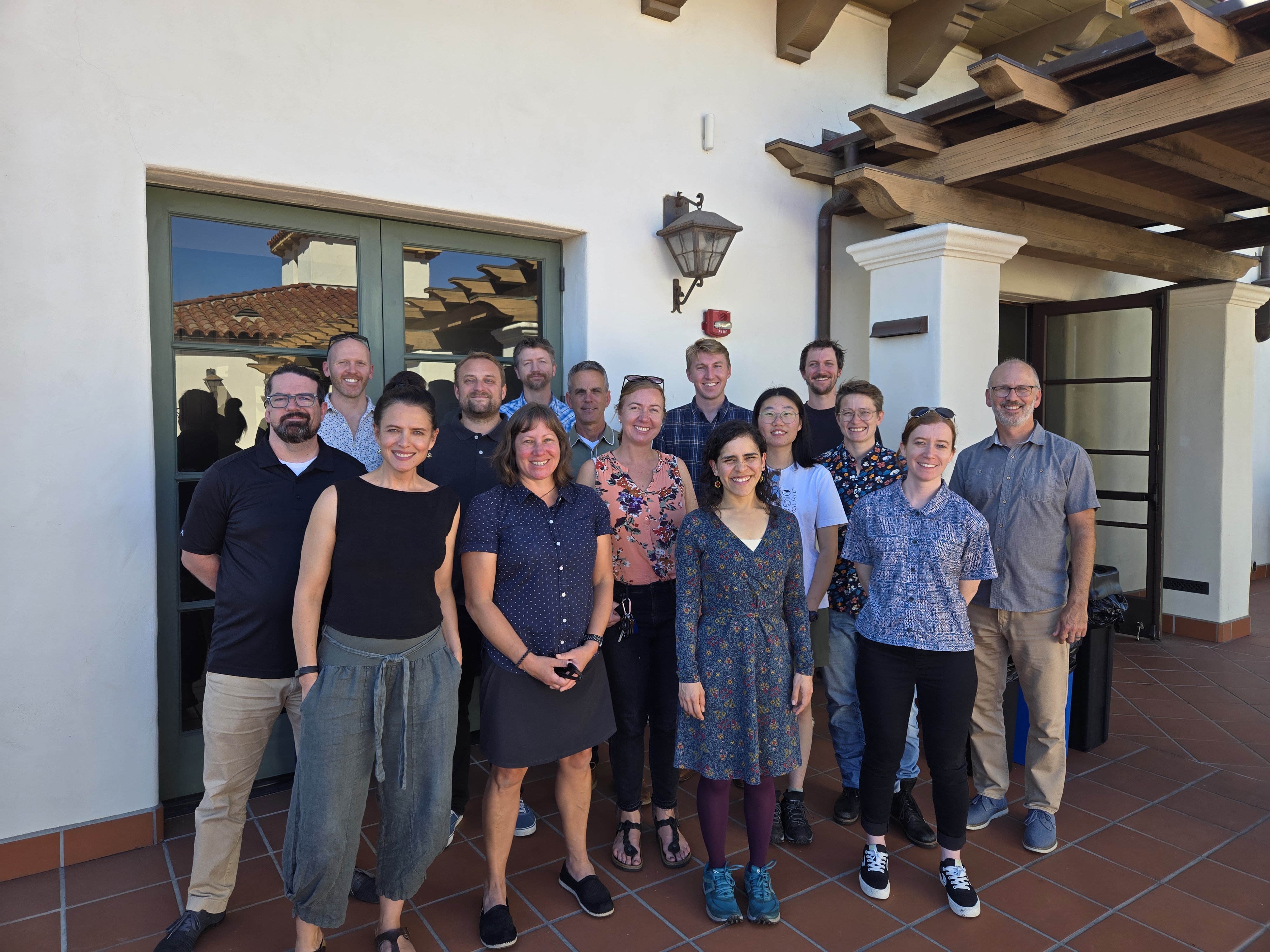
AI is already reshaping how NCEAS researchers collaborate and synthesize information, and its value was on full display during the NCEAS-hosted workshop, “Innovation in Digital Assets for Biodiversity.” The workshop brought together experts across disciplines, technologies, and regions to examine gaps in automated biodiversity monitoring and identify practical paths forward.
During the workshop, King used AI tools to rapidly extract and organize ideas from hundreds of handwritten sticky notes, saving hours of manual work and allowing participants to focus on solutions rather than logistics. Beyond facilitation, AI is also helping researchers streamline coding, data cleaning, and documentation by supporting reproducible, open-source workflows that can be applied across species and regions.
“These tools don’t replace expertise,” King notes. “They free us up to focus on synthesis, interpretation, and collaboration: the things humans do best.”
Workshop discussions connected digital assets to global conservation priorities, including Essential Biodiversity Variables, ecosystem monitoring frameworks, and international targets such as 30x30. Case studies highlighted how AI-enabled tools from camera traps to wildlife re-identification systems can support more timely, inclusive, and actionable biodiversity assessments.
Responsible AI, Transparent Science
Across all NCEAS projects, responsible AI use is non-negotiable. Researchers document where and how AI is used, clearly describe workflows, and make code and data publicly available whenever possible. Ultimately, AI is treated as a tool, not an authority.
“AI can speed things up, but researchers are still responsible for checking results and explaining how conclusions are reached,” says King. “Transparency in AI use is what makes these tools trustworthy.”
Looking Ahead: AI for Faster, Fairer Conservation Decisions
Looking forward, NCEAS researchers see AI playing a growing role in making biodiversity data easier to find, interpret, and apply. Emerging approaches such as plain-language data querying and edge computing (where AI processes data directly on sensors or drones) could reduce delays, lower barriers to access, and enable near–real-time monitoring in remote regions.
As the Digital Assets for Biodiversity project makes clear, automated biodiversity monitoring already holds substantial promise. By combining AI with synthesis, collaboration, and open science, NCEAS is helping turn that promise into practical tools for conserving life on Earth: faster, more equitably, and at the scale the challenge demands.