From Interviews to Insight: Using AI to Modernize Fisheries Management

Fisheries management decisions are shaped not only by ecological data, but by people. Through their experiences, values, and relationships, the people behind fisheries in the Gulf of America provide key insight into how we can best manage them. Interviews, workshops, and other qualitative social science data capture this human dimension, yet much of that information remains difficult to analyze and apply at scale.
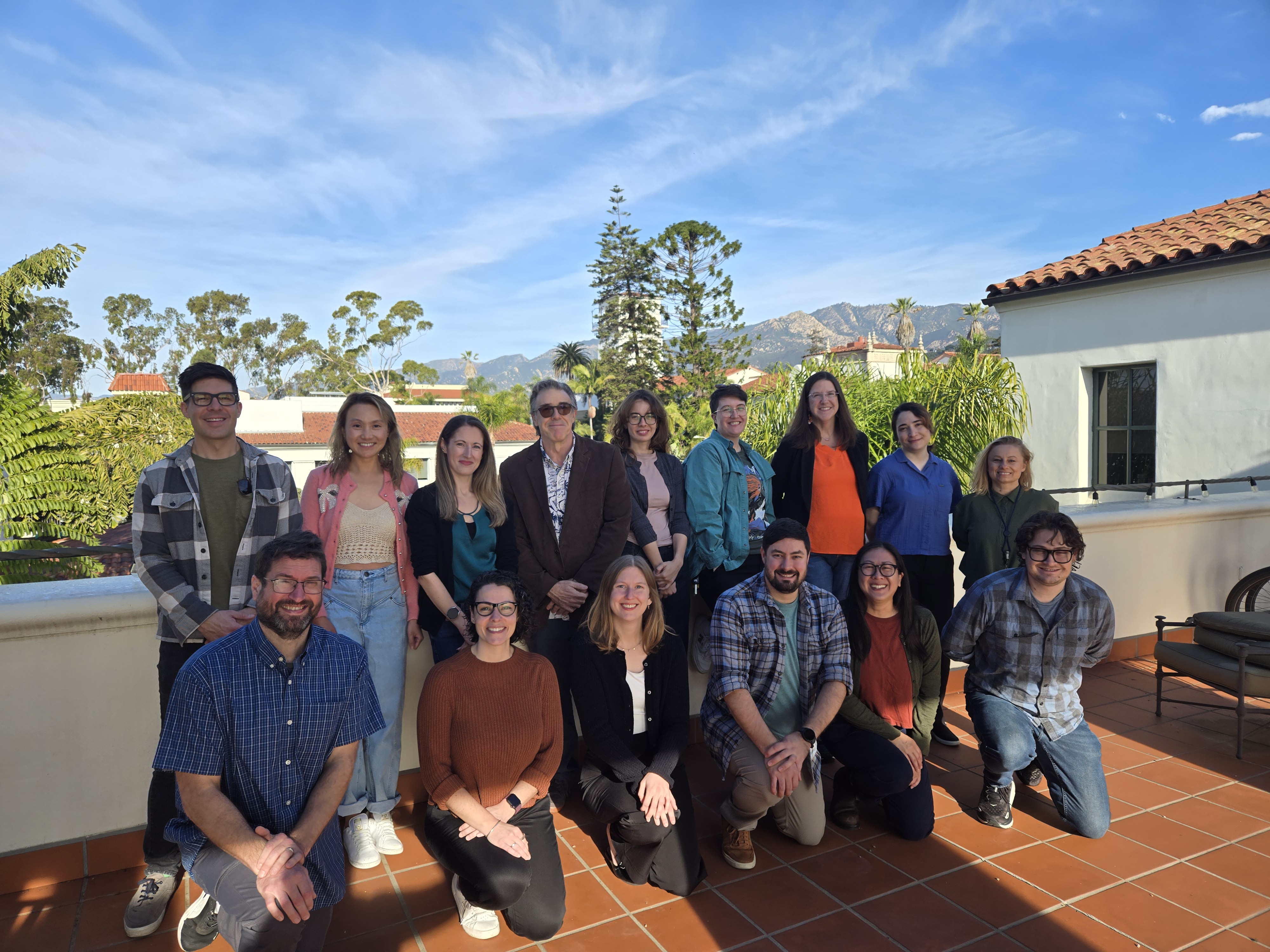
A 2025 Gulf Ecosystem Initiative working group is addressing this challenge by exploring how AI can support fisheries managers in making better use of qualitative data–non-numerical, descriptive information that captures people’s thoughts, emotions, and experiences. The team convened for the first time in person at NCEAS this December in Santa Barbara, setting the foundation for a series of targeted case studies now underway. These studies are designed to test how AI tools can responsibly support qualitative analysis in applied fisheries management settings.
Led by Dr. Kelsi Furman (University of South Alabama), Dr. Matthew McPherson (NOAA Southeast Fisheries Science Center), and Dr. Nathan Brugnone (Two Six Technologies; Johns Hopkins University; Michigan State University), the working group brings together fisheries social scientists, managers, and AI experts to co-develop methods that are both technically robust and operationally relevant.
The project fits squarely within NCEAS’ AI for the Planet initiative, highlighting how emerging technologies can accelerate environmental science while remaining grounded in human expertise and responsibility.
Why does qualitative data matter? Why has it been hard to use?
Qualitative social science data plays a critical role in fisheries management, offering insight into stakeholder perspectives, governance dynamics, and social and economic impacts that quantitative indicators alone cannot capture. Yet, despite its importance, using these data at scale has long posed challenges, particularly when management decisions must be made on tight timelines.
As McPherson explains:
“Fisheries management is fundamentally about managing people, not fish. Qualitative social science data, such as fishers’ observations, local knowledge, and community opinions and preferences, are essential because they show how people experience regulations, environmental change, and economic realities on the water, and what they want from management. These insights help explain behavior, adaptation, and values that are often missing from traditional fisheries metrics, making management more effective and more likely to gain public support.”
However, translating these insights into information that can inform decisions across regions or over time has proven difficult. Using qualitative data at larger scales has historically been challenging, McPherson notes, “because it takes substantial effort to collect, standardize, compare, and synthesize, especially in ways that are useful across regions or over time.”
While rapid, semi-structured interviews with key informants can be conducted relatively easily, McPherson explains that “analyzing them systematically and efficiently has been difficult.” At the same time, “large volumes of data from publicly available sources such as public comments, meeting transcripts, blog posts, and social media are increasingly available, yet analyzing them in ways that are transparent, reproducible, and credible for decision makers remains challenging.”
As a result, “much of this valuable information remains underutilized, despite its high relevance for understanding community opinions and preferences and informing management decisions,” McPherson added. To address this long-standing challenge, the working group is exploring “new approaches, including the responsible use of AI, offer promising opportunities to analyze qualitative data more efficiently and consistently, helping provide social information that is directly useful for fisheries management.”
By focusing on existing qualitative datasets held by agencies such as NOAA Fisheries, the working group aims to address a persistent bottleneck in fisheries management: a wealth of information that is rich in insight, but costly and time-intensive to analyze using traditional approaches.

A timely convergence of need and technology
The project arrives at a moment when fisheries managers are increasingly motivated
(and in some cases required) to incorporate stakeholder perspectives and social impacts into management decisions. “This work is uniquely positioned at the intersection of fisheries social science, cutting-edge AI, and natural resource management,” Furman notes. Recent advances in AI, particularly large language models (LLMs), have opened up new possibilities for accelerating qualitative analysis without abandoning rigor.
By improving efficiency through the application of cutting-edge technology, the project aims to modernize fisheries management in the Gulf while amplifying the voices of fishing communities.

What the project is working toward
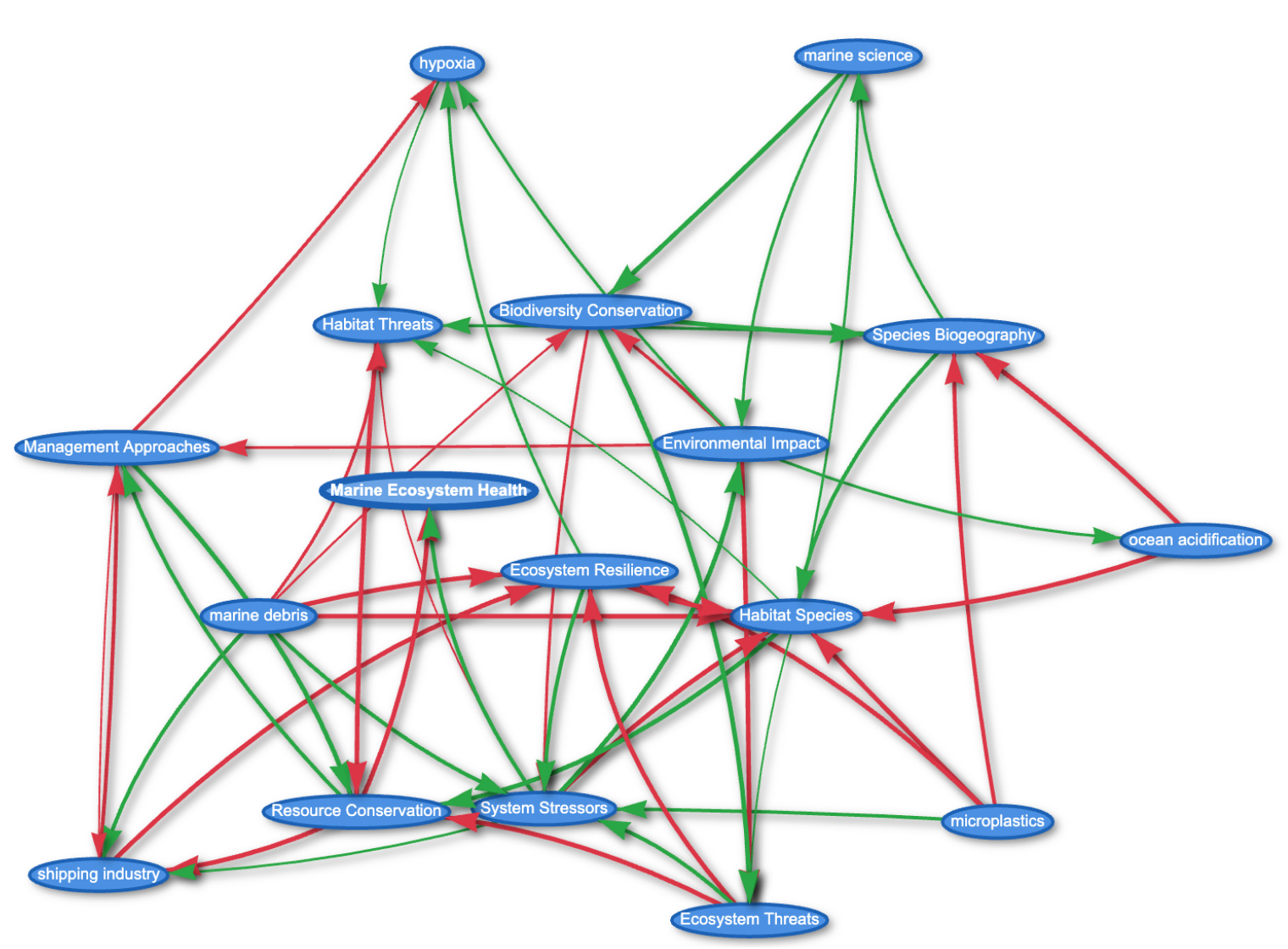
Across the project, the working group is testing how AI tools can support analytical approaches commonly used in fisheries social science, including conceptual modeling to map relevant relationships, analysis of interview and workshop transcripts, and stakeholder-driven management strategy evaluations.
The goal is not only to demonstrate what is possible, but to generate practical guidance for how AI-driven approaches can be responsibly integrated into social science workflows used by fisheries managers.
Keeping human expertise central
A core focus of the project is ensuring that AI supports, rather than replaces, human expertise. By using AI tools to handle time-intensive tasks such as pattern detection, coding, and model generation, more time is created for thoughtful interpretation and decision-making by the people behind fisheries management.
As Brugnone explains:
“We are evaluating commercial LLMs, in-house AI models, and agentic solutions for qualitative coding and causal discovery. Causal discovery is the process of identifying relevant biophysical, ecological, and social processes, variables, and interactions that describe system structure and behavior. This is step zero in sustainability science. Our automated causal discovery tool is intended for application to large, unstructured textual datasets including interview transcripts, scholarly articles, and public comments.”
At the same time, the team is clear-eyed about the limits of current technology. Producing models that are both scientifically rigorous and faithful to stakeholder perspectives remains difficult—even with state-of-the-art tools.
“Producing scientifically sound causal models that also faithfully represent stakeholder perspectives is a remarkably challenging problem even for state-of-the-art LLMs. Evaluation is, furthermore, challenging and time-consuming yet essential. Some nerds on our team even think it is fun.”
To address these challenges, the project emphasizes transparency, evaluation, and participatory development throughout the AI workflow.
“To ensure rigorous, holistic, and transparent development and evaluation, our team—made of subject matter experts in fisheries, social science, AI, computational modeling, and ethics—employs a participatory methodology. Our benchmark datasets have, in turn, been developed through participatory processes with stakeholders, and evaluation is conducted by the researchers who collected the data. This keeps AI development and evaluation as close to the source as possible.”
Transparency and reproducibility are also core priorities.
“Our datasets and associated code will, furthermore, be made available to facilitate replication and extension.”
Beyond the immediate working group, the effort is embedded within a growing research community focused on strengthening evaluation and accountability.
“Our network of research collaborators continues to grow and thereby increase the number and diversity of use cases, datasets, and evaluators. We regularly interface with the Community Resilience Group in the Engineering Laboratory at the National Institute of Standards and Technologies to refine our measurement and evaluation processes.”
Looking ahead, Brugnone emphasizes that building trustworthy AI for fisheries social science is a collective effort.
“There is much research ahead, and we invite folks to reach out to collaborate. It is going to take a community to raise AI into a mature scientific tool for fisheries social science.”

The power of working across disciplines
One of the defining features of the working group is its interdisciplinary structure. Bringing social scientists, fisheries managers, and AI experts into the same space (both physically at NCEAS and through ongoing collaboration) is shaping how the project evolves.
As Furman explains, “Having an interdisciplinary team is essential to the success of this project.” The working group brings together “an incredible mix of data scientists with expertise in cutting-edge AI tools, social scientists with a wealth of qualitative data, and fisheries scientists and managers looking for stakeholder-driven solutions to complex management challenges.”
That diversity was especially evident during the group’s first in-person meeting at NCEAS. “Our first goal was to build a shared language around AI and fisheries social science,” Furman said. “One of my favorite moments from that meeting was the excitement and energy in the room as we learned from one another and expanded our knowledge across disciplines.” The meeting also created space for “thoughtful conversations about ethics and how AI can support research and management needs in a transparent and responsible way.”
Despite their different backgrounds, Furman emphasized that the group is aligned around a common goal: “to enhance the efficiency, robustness, and applicability of qualitative data analysis to address uncertainties and achieve management objectives for Gulf fisheries.” Through their time at NCEAS, the team has the opportunity “to synthesize cross-disciplinary insights into actionable management tools and move the needle forward in a meaningful way.”
Looking ahead
As part of the AI for the Planet spotlight series, this working group illustrates how emerging technologies can be applied thoughtfully to environmental challenges: unlocking underutilized data, supporting more inclusive decision-making, and strengthening the connection between science and emerging technologies.
With case studies underway and future meetings planned, the team is working toward a vision in which qualitative social science data plays a more central, actionable role in fisheries management. The full potential of these approaches will continue to emerge over the course of the group’s two-year project, and we look forward to seeing how this work helps move fisheries management in the Gulf into the 21st century.